The Complete Guide to Starting a Raised Bed Vegetable Garden in Western PA

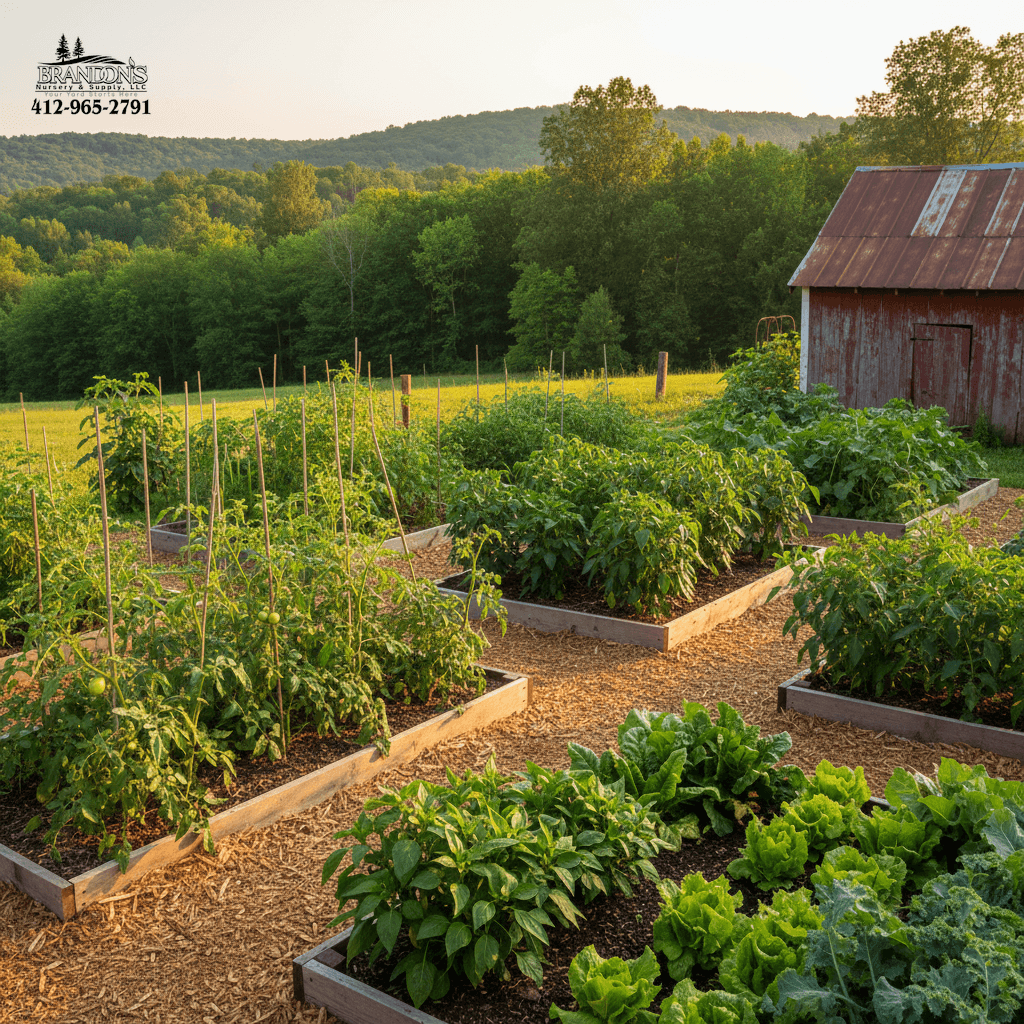
The Complete Guide to Starting a Raised Bed Vegetable Garden in Western PA
If you've ever tried to dig a garden straight into a Western PA yard, you know the struggle. Our clay-heavy soil compacts into something resembling pottery, drains poorly, and takes forever to warm up in spring. That's exactly why raised bed gardens have become the go-to solution for vegetable growers across the Pittsburgh region.
At Brandon's Nursery & Supply, we've helped hundreds of local gardeners make the switch to raised beds — and the results speak for themselves. Bigger harvests, fewer headaches, and a growing season that starts weeks earlier.
Why Raised Beds Work So Well in Southwestern PA
Our region presents a unique set of gardening challenges that raised beds solve:
- Heavy clay soil — Instead of fighting it, you grow above it in custom soil you control
- Short growing season — Raised beds warm up 2-3 weeks faster than ground soil in spring
- Wet springs — Elevated beds drain better, so your seedlings aren't sitting in waterlogged ground through April
- Hilly terrain — Raised beds create level growing surfaces on sloped yards
The difference is dramatic. Ground-level gardens in our area often can't be worked until late April. A raised bed with good soil mix? You can plant cool-season crops by mid-March.
Choosing the Right Size and Material
Size
For most backyard gardeners, we recommend starting with a 4x8 foot bed that's 12 inches deep. Here's why:
- 4 feet wide means you can reach the center from either side without stepping on the soil (compaction is the enemy)
- 8 feet long gives you enough space for 3-4 different crops
- 12 inches deep is enough for most vegetables, including tomatoes and peppers with deep root systems
If you have the space, two 4x8 beds give you incredible flexibility with crop rotation.
Materials
- Cedar — Our top recommendation. Naturally rot-resistant, lasts 10-15 years, looks beautiful as it weathers to silver-gray
- Hemlock or pine — Budget-friendly option, lasts 5-7 years. Avoid pressure-treated lumber if growing edibles
- Galvanized steel — Trendy and virtually indestructible. Heats up faster in spring (bonus for us), but can get hot in full summer sun
- Concrete blocks — Cheap and permanent. Not the prettiest, but the hollow cores are great for planting herbs
We carry cedar boards and can cut them to size right here at the nursery.
The Perfect Soil Mix
This is where most people go wrong. Don't just fill your beds with topsoil — it'll compact and drain poorly, defeating the whole purpose.
Our recommended mix (by volume):
- 40% quality topsoil — Provides body and nutrients
- 40% compost — We sell bulk compost by the yard. Feeds your plants and improves soil structure
- 20% coarse perlite or vermiculite — Keeps the mix light and well-draining
For a single 4x8x1 foot bed, you'll need roughly 1 cubic yard of mix total. Stop in and we'll help you calculate exactly what you need.
Amending Each Season
Every spring, top-dress your beds with 2-3 inches of fresh compost. Our clay-country water is slightly acidic, which most vegetables prefer, but a soil test every couple years is smart. We carry pH test kits and lime if you need to adjust.
What to Plant and When
Here's a planting calendar tailored to our Zone 6b growing season (based on an average last frost of May 10-15):
Early Spring (March 15 - April 15)
Get these cold-hardy crops in as soon as the soil in your raised bed is workable:
- Lettuce and spinach — Direct sow. Can handle frost down to 28°F
- Peas — Direct sow along a trellis. 'Sugar Snap' is our best seller
- Radishes — Direct sow. Ready to harvest in 25-30 days
- Kale and Swiss chard — Transplants or direct sow. Will produce through fall
After Last Frost (May 15 - June 1)
Wait for consistent warm soil (60°F+) before planting these:
- Tomatoes — 'Celebrity', 'Better Boy', and 'Sun Gold' cherry are bulletproof here
- Peppers — 'California Wonder' bell and 'Jalapeño Early' do great in our summers
- Cucumbers — Direct sow or transplant. Give them a trellis to save space
- Zucchini — One plant is enough. Trust us on this one
- Basil — Plant next to your tomatoes. They're great companions
Succession Planting (July - August)
Your raised beds warm soil means you can push the fall season further than ground gardeners:
- Bush beans — Direct sow in early July for a September harvest
- Fall lettuce and spinach — Sow in August when the heat breaks
- Kale — Actually gets sweeter after frost. Plant in July for fall/winter harvest
Layout Tips for a 4x8 Bed
Here's a sample layout that maximizes a single bed:
- Back row (north side): 3-4 tomato plants staked or caged, 18 inches apart
- Middle row: Peppers and basil alternating, 12 inches apart
- Front row: Lettuce, spinach, or radishes — quick crops you'll harvest before the back rows fill in
This layered approach means your tall plants don't shade the shorter ones, and you get multiple harvests from the same bed throughout the season.
Common Mistakes to Avoid
Skimping on depth. Six-inch beds look nice in photos but limit what you can grow. Go 12 inches minimum.
Overcrowding. It's tempting to squeeze in one more tomato plant. Resist. Overcrowded plants get less sun, less airflow, and more disease. Follow the spacing on the tag.
Forgetting to water. Raised beds dry out faster than ground gardens, especially in our humid but sometimes drought-prone summers. Water deeply 2-3 times per week, or install a simple drip irrigation line.
Not mulching. Two inches of straw or shredded leaf mulch keeps moisture in, weeds down, and soil temperature stable. It's the single easiest thing you can do to improve your harvest.
Get Started This Season
Whether you're building your first raised bed or your fifth, stop by Brandon's Nursery & Supply. We carry cedar lumber, bulk soil and compost, vegetable starts, seeds, and everything else you need. Our team can walk you through the setup and help you pick varieties that do well right here in Western PA.
Your yard starts here — and so does your best garden yet.